
If you were anywhere from Ames to Des Moines in July of 2026, you probably remember it. The National Weather Service clocked hail up to 2.75 inches (baseball-sized), wind gusts as high as 80 mph in parts of the region, and 4 to 7 inches of rain in the Des Moines metro in a single afternoon. If your neighborhood was impacted by any storms that came through the metro this summer, your roof went through something, whether you’ve seen proof of it yet or not.
Central Iowa, July 2026. Source: National Weather Service
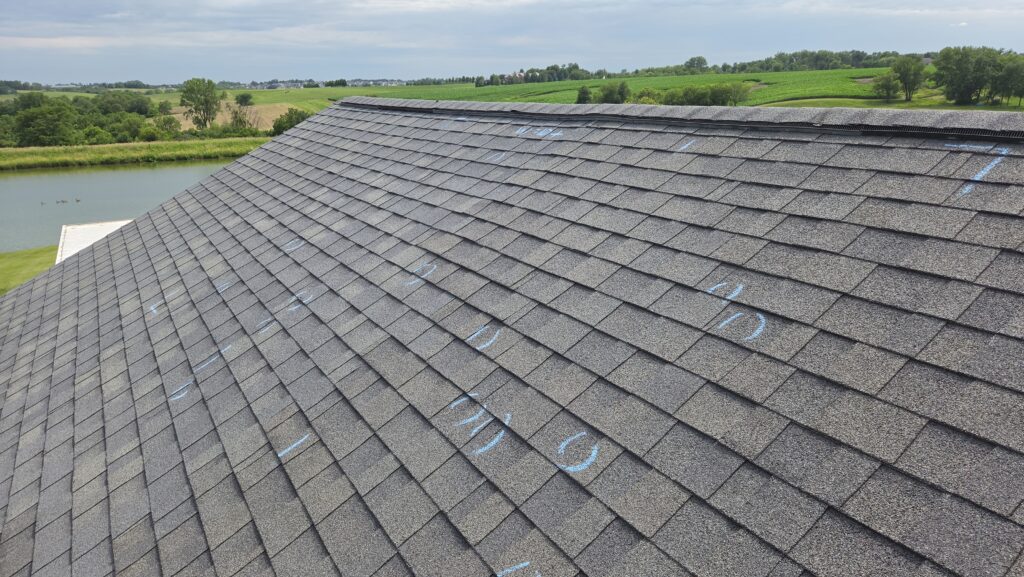
Hail damage doesn’t always look like damage.
A lot of homeowners picture hail damage as cracked or missing shingles, and sometimes it is. More often, it’s subtler: small bruises or dents where hail hits and knocks granules loose without punching all the way through, dented gutters and downspouts, dinged vent covers or AC units, or soft spots you can only really feel by walking the roof. None of that looks dramatic from the driveway. All of it can shorten the life of a roof or turn into a leak once winter ice starts working its way into every weak spot hail already found.
What to actually check, (or ask us to check):
- Start at the gutters. Granule buildup that looks heavier than is often the first sign something happened up top.
- Look at anything metal on the roof: vents, flashing, AC housing, and gutters dent more visibly than shingles do, and they’re a good proxy for what the shingles took.
- Walk the yard for any debris that shouldn’t be there.
- Then go up to the attic, if you can, and check for anything that wasn’t there before a storm: a new water stain on the decking, a damp smell, or daylight coming through anywhere it shouldn’t.
None of that requires a ladder, and all of it is worth five minutes if a storm rolled through recently.
And if a storm produced hail anywhere near baseball size in your area, assume there’s damage until an inspection says otherwise, even if the roof looks fine from the ground.
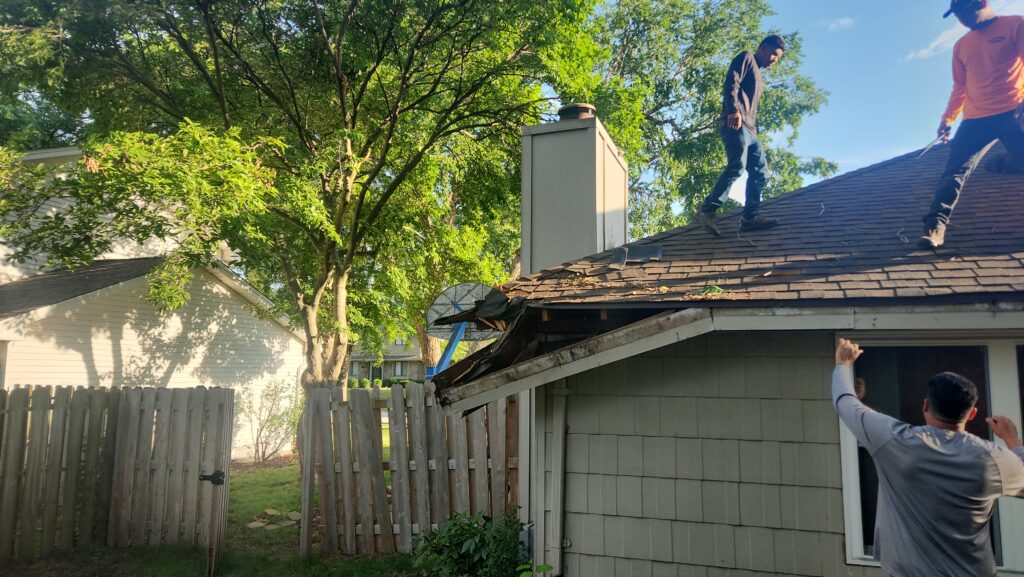

Be careful who you let on your roof.
Following severe weather, out-of-state storm chasers frequently swarm impacted neighborhoods, promising quick inspections, misleading homeowners about insurance filing deadlines, and aggressively pushing complete roof replacements. While some contractors are reputable, many disappear before you ever need follow-up service or warranty work. A trustworthy evaluation focuses entirely on actual conditions. In many cases, that means minor fixes like replacing damaged flashing or gutters – and if your home emerged unscathed, an honest team will tell you directly.
Why this is worth doing before winter, not after:
Storm damage doesn’t heal on its own, and Iowa winters are not gentle with a roof that’s already compromised. Ice works its way into cracks and gaps that summer hail created, and a roof that made it through July fine can start leaking in February for reasons that trace straight back to a storm from six months earlier. Getting an inspection now, while the damage is recent and the weather’s still cooperative for roofers to actually get up there, beats discovering a leak the hard way mid-winter.

Insurance timing matters here, too.
Most homeowners’ policies have a window for reporting storm damage, and that window is shorter than people expect: most often within one year of the date of the storm, but not years. Waiting until a small hail dent turns into a visible leak can mean the difference between a claim that gets approved and one that gets questioned for being reported too late. A documented inspection now is also just better paperwork if you do end up filing later. We recommend checking with your insurance company to confirm the filing deadline for your claim.
What a real inspection looks like.
Every inspector on our team holds HAAG certification, so they evaluate hail and wind impact using the exact standards insurance adjusters rely on – focusing on verifiable indicators that support a claim rather than quick visual impressions. We thoroughly examine the entire roof surface, flashings, and metal components, giving you an honest assessment of whether you need repairs, a complete replacement, or no action whatsoever. We don’t push unnecessary work, and if your home escaped storm damage entirely, we will be the first to let you know.
If this summer’s storms rolled through your part of the metro and you haven’t had anyone look at your roof since, that’s the one thing worth doing before the weather turns.
Schedule your Central Iowa inspection and estimate today.
Or call 515.225.8866
Storm damage? Get a free estimate.
- HAAG-certified inspectors
- Honest assessment, no pushy upsells
- Most roofs done in a day
Or call 515.225.8866


Kevin and Josh: HAAG Certified Roofing Inspectors